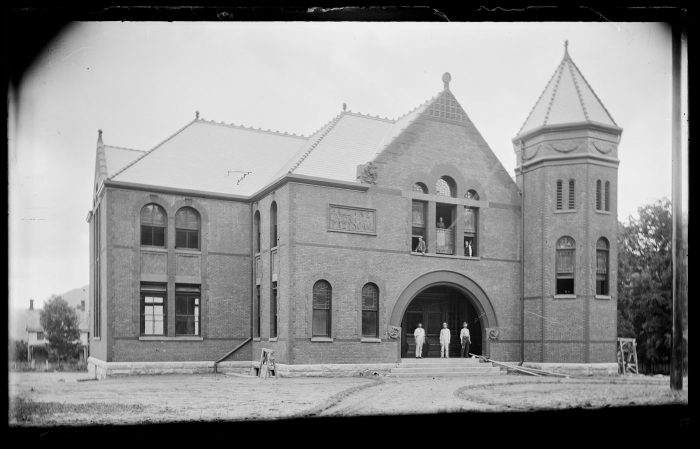


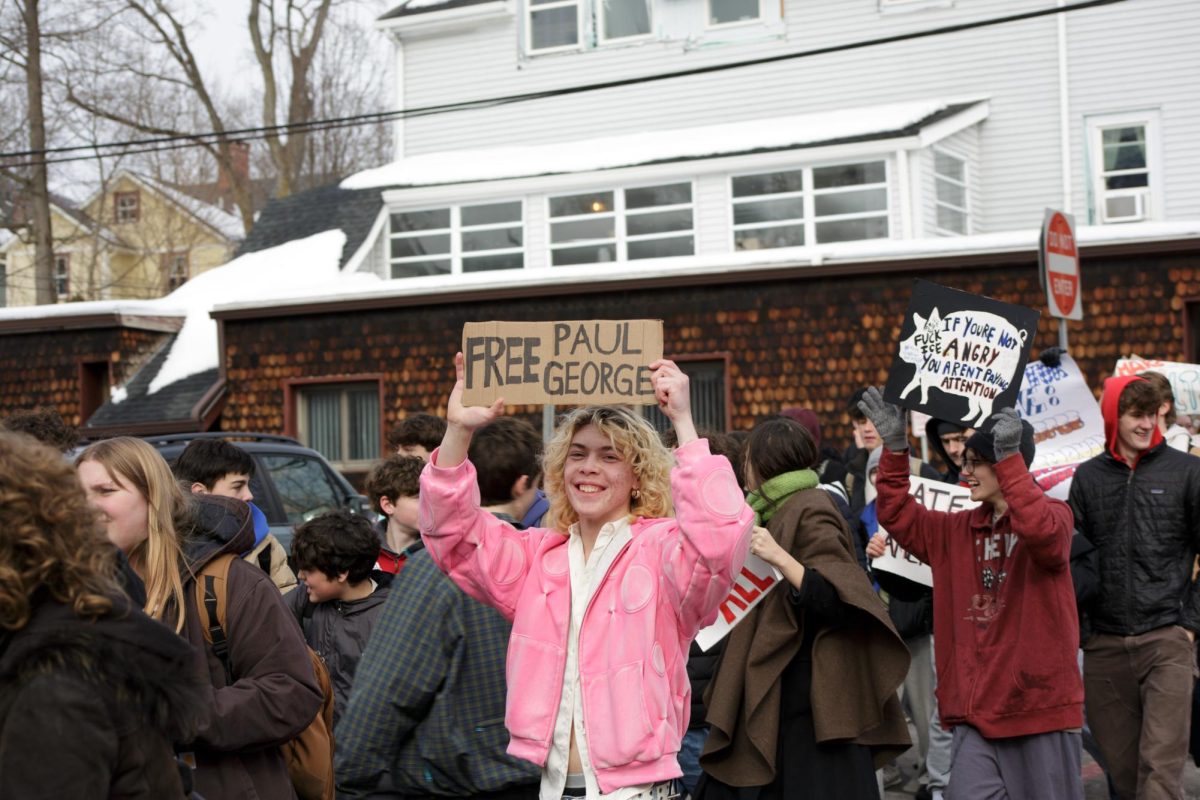


Haldane is perched on a hillside 200 feet above the Hudson River, and it is around that same short distance from Haldane’s campus to Cold Spring’s Main Street. The village is almost as key a part of student life as the campus itself. Students frequently work in the village, eat in its restaurants during lunch periods, meetup on its sidewalks after school, and even hike the surrounding trails. The homecoming parade marches straight up Main Street and down Morris Avenue, a short distance to the football field each year, and seniors have long enjoyed the tradition of “scooping the loop” by the riverfront bandstand to mark the end of their time at Haldane.
Junior Wolf Burkin, a previous Los Angeles resident, moved to Cold Spring at the beginning of the 2025/26 school year, and he already takes advantage of the small-town opportunities. “I go to the coffeehouse to study. Sometimes I’ll go to the frozen lake by the school and just hang out by there,” said Burkin, “It’s a nice small town life. I mean, obviously, there’s not as many things that you can do compared to if you’re from a bigger city, but I think it’s cool. You get this sense of community because you see the same people over and over again.”
High School Principal Julia Sniffen thinks that one of the best things about being so close to the heart of Cold Spring is “that gradual release of responsibility”. Currently, underclassmen at Haldane are not permitted to leave campus during their lunch and free periods. Freshmen must eat lunch in the cafeteria, sophomores can eat lunch anywhere on campus, juniors are allowed to leave campus during lunch, and seniors can leave campus during lunch and senior privilege periods. This encourages students to support local businesses while slowly giving them more independence as they grow up.
Students have mixed opinions on the school’s policy. Senior Seth Lunin-Pack supports the practice, stating, “I think the option to leave school during lunch is a good idea, as everyone will have some cafeteria lunches that aren’t to their taste.” However, sophomore Petra Brooks-Saladyga wishes she had more freedom during lunch. “I find it somewhat reasonable from the point of view of the school staff, but I hate school lunches, and I really wish I could just go get a slice of pizza or go home to make lunch for once,” she said. As a sophomore, she isn’t allowed to leave campus for lunch, though her house is within walking distance of campus.
Sniffen believes that the close proximity of the village is “very freeing for students” since it means that students who live in the village don’t need to have access to a car to travel to and from school. Brooks-Saladyga agrees. “I have much more freedom since I don’t have to ask my parents to drive me everywhere,” she said.
Even some students who live farther from the village experience these benefits. “Living outside of town, I do have to drive to get anywhere, but it is nice to only have to park once to go to multiple places,” said Lunin-Pack, “The walkability has also let me spend more time with people who do live in town, as even without licenses, some of my friends are able to be quite spontaneous in the afternoon.” He added that he often stays in town after school to spend time at friends’ houses and local restaurants like Cold Spring Pizza.
However, this proximity does come with its challenges. Because the village is walkable, it can be hard to keep students on campus. “Ensuring that those sophomores do stay on campus to try to put parameters in place at times can be challenging,” Sniffen stated.
The principal thinks this closeness affects both students and the community. “It creates a nice culture between the community and the school,” said Sniffen, who makes a point to attend a couple of Chamber of Commerce meetings every year. She continued, “I think the businesses within the community see themselves as partners to the school, and we see it the same way, like they’re partners to us. So I think that that enhances not just the school, but it enhances the community being in the village.” Some examples of this cooperation include student poetry being displayed at Split Rock Books on Main Street, advertisements for events such as the Haldane Drama productions in numerous local shops, and the senior internship program, which gives students the opportunity to obtain work experience from businesses in and around the village.
Brooks-Saladyga also feels this sense of community created by the small town. She said, “everything seems more connected, and everyone knows each other more since it’s so packed together. The only downside is that I actually have to walk to get somewhere, and I’m lazy.”