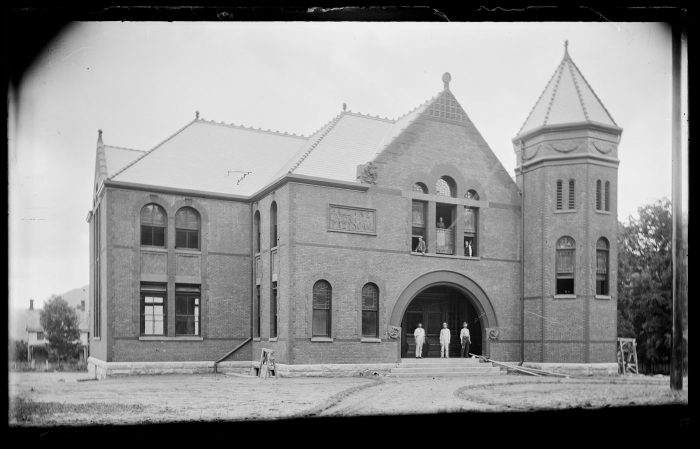



When you walk into Haldane High School, you’re greeted by a single hallway. Look down it both ways and then walk up the stairs – you’re now acquainted with essentially the entire high school. According to the New York State Education Department, only 318 students were enrolled in Haldane High School for the 2024-25 year. This makes for a very unique public school experience, with benefits and drawbacks.
Perhaps the greatest benefit of our school’s small population is how easy it is for students to build connections with their classmates and teachers. Many Haldane students have been going to school with the same classmates since Kindergarten and feel a strong connection to their community. “I know everyone in my grade,” said sophomore Leo O’Neil. “We’re all so tight-knit, and I never feel alone or overlooked.” Additionally, most students have personal relationships with almost every teacher and staff member. “You often have a class with every single teacher in the school at some point,” said O’Neil. “All of the teachers and administrators know you,” said senior Louise Denehy. “I imagine that in a big school, you would feel like a nameless face. I feel taken care of here.” The sense of community at Haldane helps students learn because they are more confident and supported when asking for help. “I absolutely think students are more comfortable asking questions in smaller classes,” said High School Physics Teacher Kieran Lynch, who has taught at schools of multiple different sizes.
However, a small student population also has its downsides. “It can feel like you’re living under a microscope, because everyone knows you and all the drama associated with you,” commented senior Sofia Kelly. Junior Clara Gelber commented, “I wish there was more diversity at Haldane.” According to US News and World Report, Haldane’s student population is 81.4% white. This isn’t a direct consequence of its size, but in a small school, it can be easy to feel that your community is not representative of the real world.
Because of its size, Haldane lacks some resources and opportunities for students. The high school only offers 14 of the 40 total AP courses. “I was interested in taking AP Environmental Studies, but our school doesn’t offer it,” said Kelly. Students sometimes work around this by taking an AP class online, but that requires extra money, and it can be more difficult to learn the subject material without an in-person teacher. “I’m taking AP Environmental Science online this year, and I would say it’s more difficult than my in-school APs,” said senior Eleanor Chew, “it’s harder to get in contact with the teacher. It’s a self-paced class, and sometimes I’ll forget about it for a while, and the assignments build up really fast.” Additionally, because there is often only one or two sections of each class, scheduling can be difficult, and students can be prevented from taking desired classes. “Since I want an art degree, it’s important that I take art every year of high school, but I have struggled to get into art classes,” said junior Ruby McCormick. “Last year specifically, I could only take half of an art class in order to fit all of my classes into my schedule, meaning I only went to the art class every other day and only got half a credit.”
The same problem affects extracurriculars. Haldane doesn’t have an orchestra, a cheerleading team, a drill team, a Junior Reserve Officers’ Training Corps, a wrestling team, or many other activities. However, this can be viewed positively as it encourages students to develop leadership skills by creating their own clubs. Senior Henry Schimming was interested in philosophy, but there wasn’t a club dedicated to it yet. “I started Philosophy Club,” he said, “we meet to present slideshows and have discussions on philosophy.”
Another aspect of going to a small school is its physical size. “We have to share so many things like the gym, cafeteria, and art rooms with younger students,” said O’Neil, “oftentimes, I’ll be trying to go into the main building and get stuck behind a long line of kindergarteners, which has made me late to class.” Additionally, since only freshmen eat lunch in the cafeteria and only upperclassmen can leave campus for lunch sophomores often have nowhere to sit during lunch.
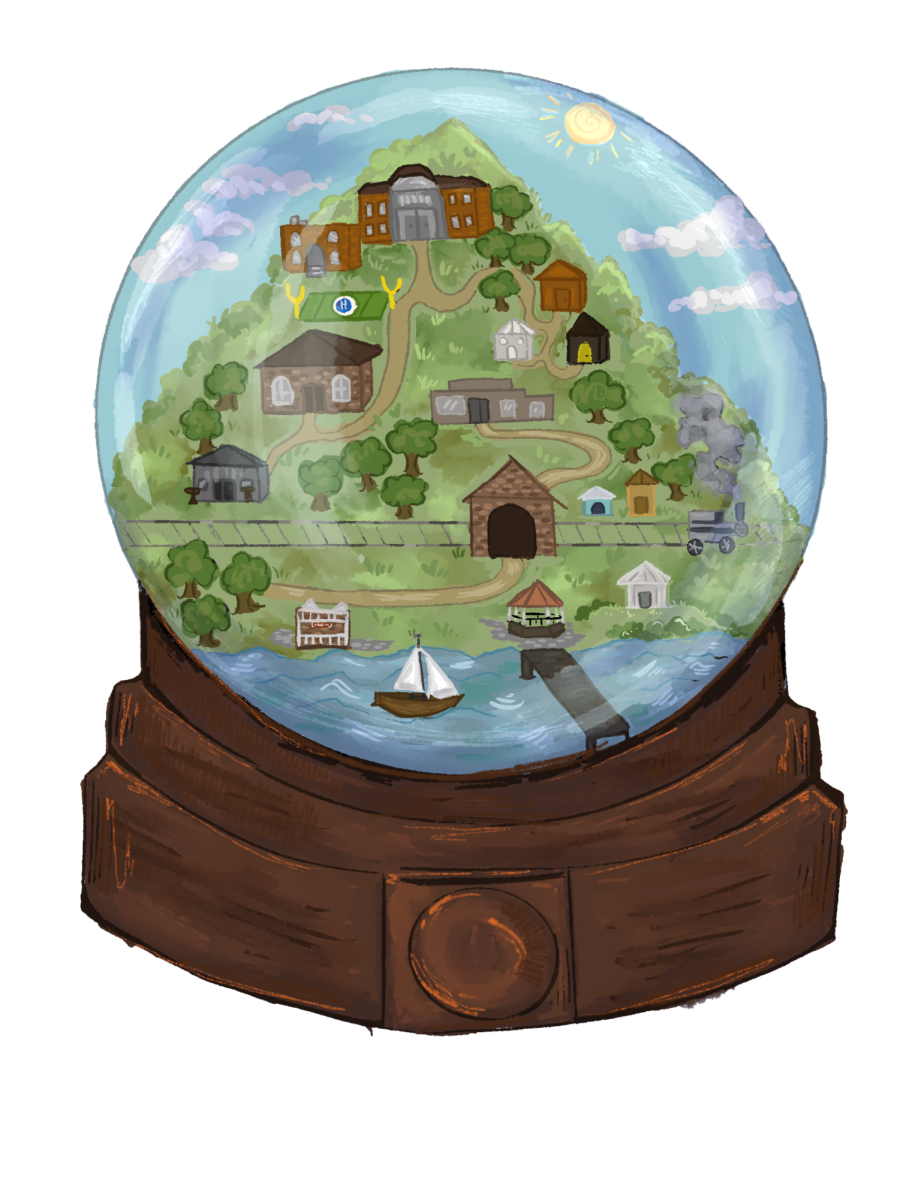
However, the fact that high school students have to share facilities with middle and elementary school students promotes community between students of all ages. “I love having so many opportunities to connect with middle and elementary school students, like through Peer Mentoring,” said O’Neil, “we have such a beautiful campus that all ages get to experience.”