



Haldane has expanded its doors beyond K-12. This year, the Haldane community is welcoming eighteen small students into their new free-of-charge pre-K program. Based on the ground floor of the elementary wing, pre-K teacher Katie Moeller leads this boisterous class of young minds and personalities from 9:00 a.m. to 2:00 p.m. with a variety of activities. According to the Haldane website’s pre-K information section, an average day consists of nature exploration, literacy and phonemic awareness stations, wellness programs, math games, and a rotation of art and music with movement, along with lunchtime and two recess periods. This program was funded via the Haldane Central School District and New York State’s Universal Pre-Kindergarten Expansion Funding program.
Christine Jamin, Haldane Elementary’s principal and overseer of the pre-K program, spoke on the newfound feasibility of this program. She said, “right now, the elementary school enrollment is decreasing, the current first grade and kindergarten only have two sections, whereas up until then, most of our grade levels have had three sections. With that decreased enrollment, we have an opportunity with space and staffing to have opened a pre-K.”
Julia Sniffen, Haldane High School’s principal, pointed out that the cost of adding this additional program was not noteworthy, saying, “because of decreasing enrollment, we were able to staff it with existing staff.” Although Haldane did not need to make these additions, other changes were necessary on campus to accommodate the new program. In order to make Haldane’s playground age-appropriate for the preschoolers, certain equipment was removed and replaced with more age-appropriate equipment. For example, the fire truck climbing structure that once sat on the Haldane playground is now gone, replaced by a jungle gym, which is available only to the youngest Haldane students.
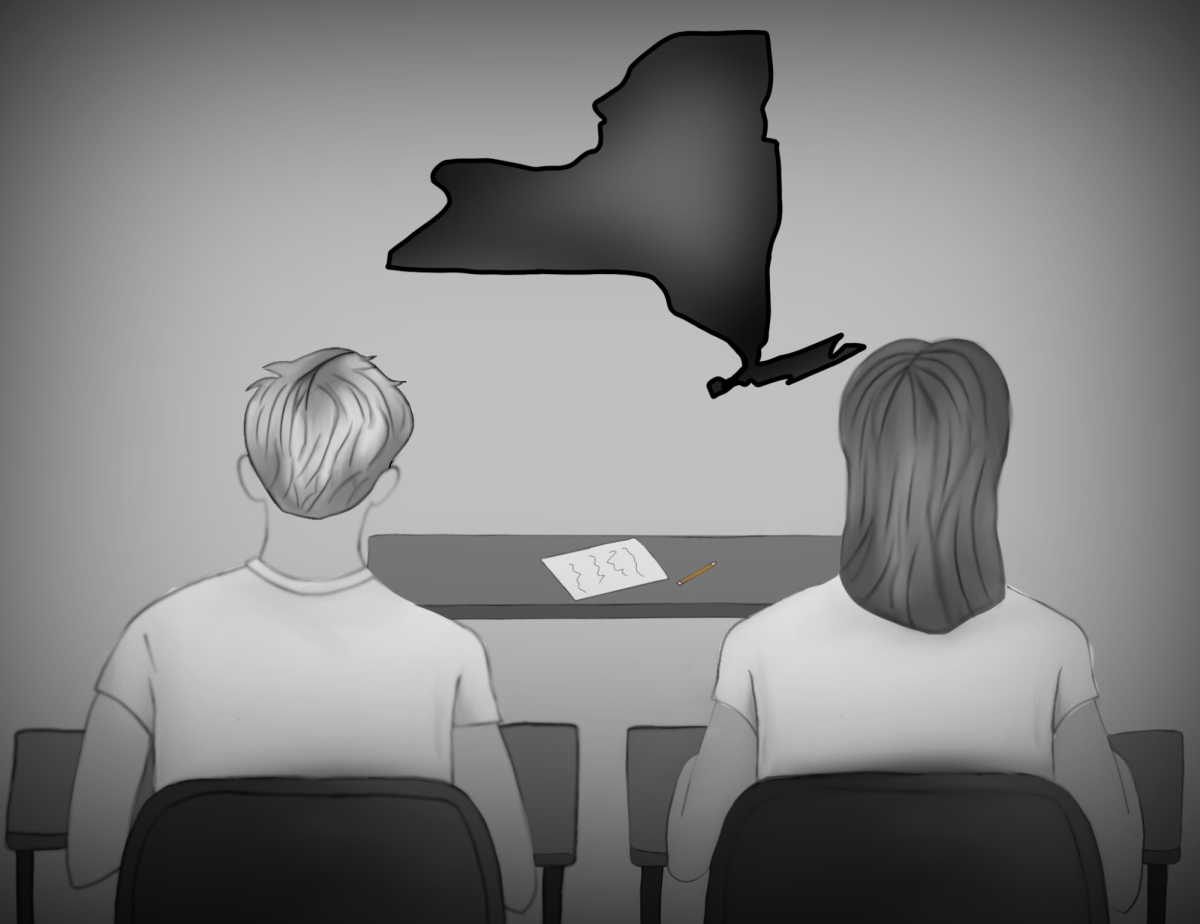
This new pre-K program is accessible to any family with a four-year-old residing within the Haldane School District, although space is limited. The program has eighteen spots to fill, but is considered a “lottery” as selection is completely randomized and not need-based. While the New York State mandated “lottery” format is intended to ensure equal opportunity, Sniffen voiced her concerns about it.
Sniffen conveyed that families who are “fiscally able to pay for private pre-K, have the same likelihood of getting a spot [in the program] as a family that might not have any means, any transportation, and have food insecurities. A child who is developmentally delayed in certain areas and receiving early intervention services at age two has the same likelihood of getting a spot [as a child receiving no early intervention services], because it’s completely randomized in terms of who gets in.”
Families who struggle financially are less likely to have access to intervention services and private or for-pay pre-K programs, such as those offered by the Philipstown Rec, that assist their children in early development and help them meet age-appropriate benchmarks. Although all eighteen families that applied this year were able to secure a spot in the Haldane program, the same may not be true for next year or years to come.
With universal pre-K on the rise, private and for-pay pre-K programs are fighting to stand out to families. Cecily Hall, Director of the Philipstown Recreation Department, spoke on the benefits of choosing a for-pay program such as the Learning Center at Philipstown Recreation Center. “We have a bit of a unique structure here, because we are part of a larger operation (The Rec Center). As a result, our children have access to our gymnasium (so helpful in the winter months!), our playground, our performance studio (dance parties and dress-up days), and our larger outdoor property (lots of hiking and nature walks on beautiful days). Those additional perks and attributes deem The Learning Center a worthwhile program to pay for each school year.”
According to Jamin, a perk to having preschoolers start at Haldane is that “kids will be coming in on a more even playing field when entering kindergarten.” Students will be getting the same learning experience or “programming” where, in the past, they came from different preschool programs, or none at all. Haldane hopes that next year there will be “eighteen students coming from the Haldane program and just a couple of kids coming from two or three programs”, to ensure a smooth transition to Kindergarten.
Sniffen concluded, saying, “I definitely think universal pre-K in the public system is a tremendous positive for students in our community. Does it answer all of our problems and … everything that every student needs? No.”