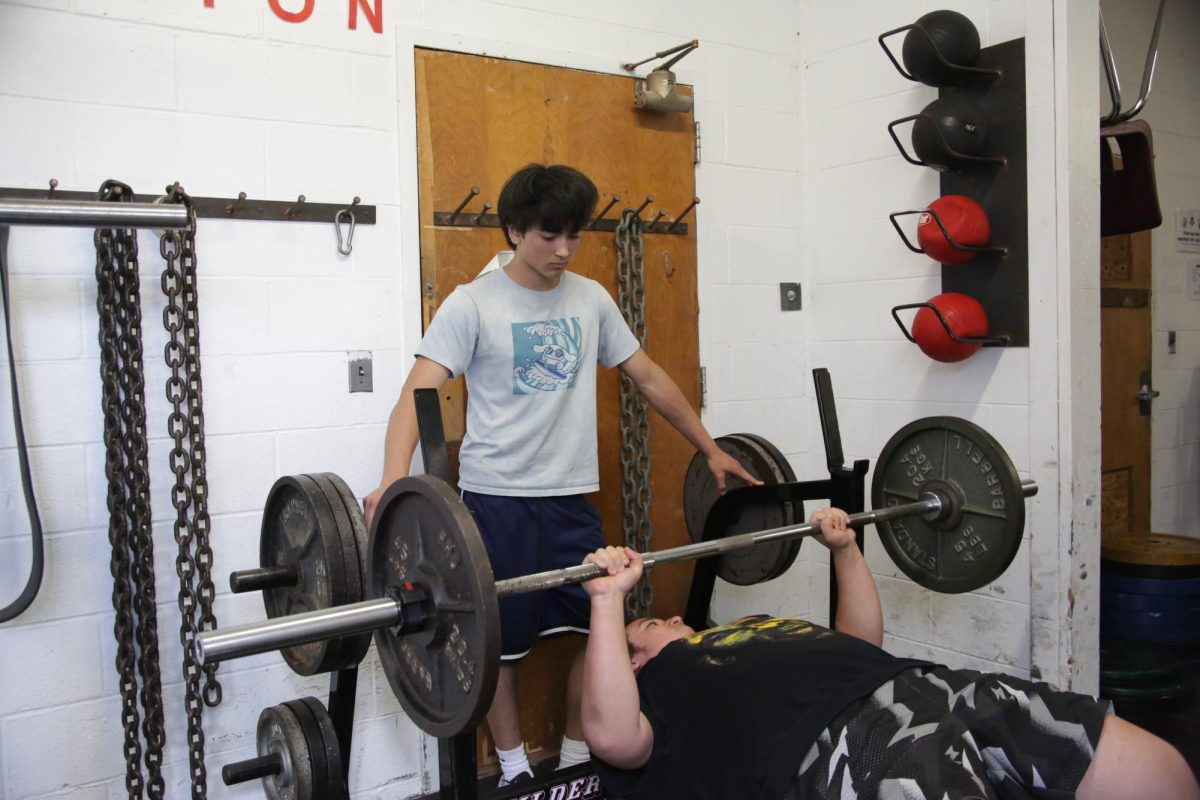




Weightlifting has the ability to improve an athlete’s potential to perform by increasing longevity, power, and endurance. Coaches, parents, health experts, and the general population have known this for decades. Th ey have encouraged athletes, as long as they are male, to lift. Why is it that women, who can be just as athletic and competitive, are not given this same level of encouragement?
There is a common misconception among female athletes that weightlifting will cause them to become too bulky or masculine. According to the National Library of Medicine, men have between 265-923 ng/dL of testosterone in their blood, the anabolic hormone that helps to build muscle mass, while women only have 15-70 ng/dL. Since men have more testosterone, they usually appear more muscular and larger. With the research, it seems that the only thing that will come from weightlifting for women is the benefits.
According to Yale Medicine, women, due to the natural growth of their hips, are two to eight times more likely than men to develop issues with their ACL. One way to help prevent a potentially career-ending injury is to strengthen the muscle. Junior Sydney Merriman, one of the captains of Haldane’s Varsity Softball team, has been prioritizing her strength to ensure she can play to the best of her ability. Merriman said, “I think it is extremely important for female athletes to work out, as it builds great strength, endurance, and skill. Not only does training improve these qualities, but it also prevents injuries. When female athletes train, it shows that power, strength, and competitiveness aren’t limited by gender.”
Despite this obvious evidence, women struggle to get into weightlifting as much as men do. Based on my personal experience, during Haldane’s girls-only weight room training days, an average of five to seven girls showed up. This is a stark contrast to the boys’ lifting days, when the weight room is packed. Freshman Theo Swan, a baseball player at Haldane, said, “It’s important for all athletes to lift because it’ll prevent injury and make competition better. I think that there are social stigmas around women lifting because some men can get insecure, especially those who aren’t confident in their lifting abilities, and they can negatively influence the female athletes around them.”
The social stigmas that surround female lifting lack science-backed evidence and are misogynistic in nature. Weightlifting is for everyone, and all people should capitalize on its benefits.