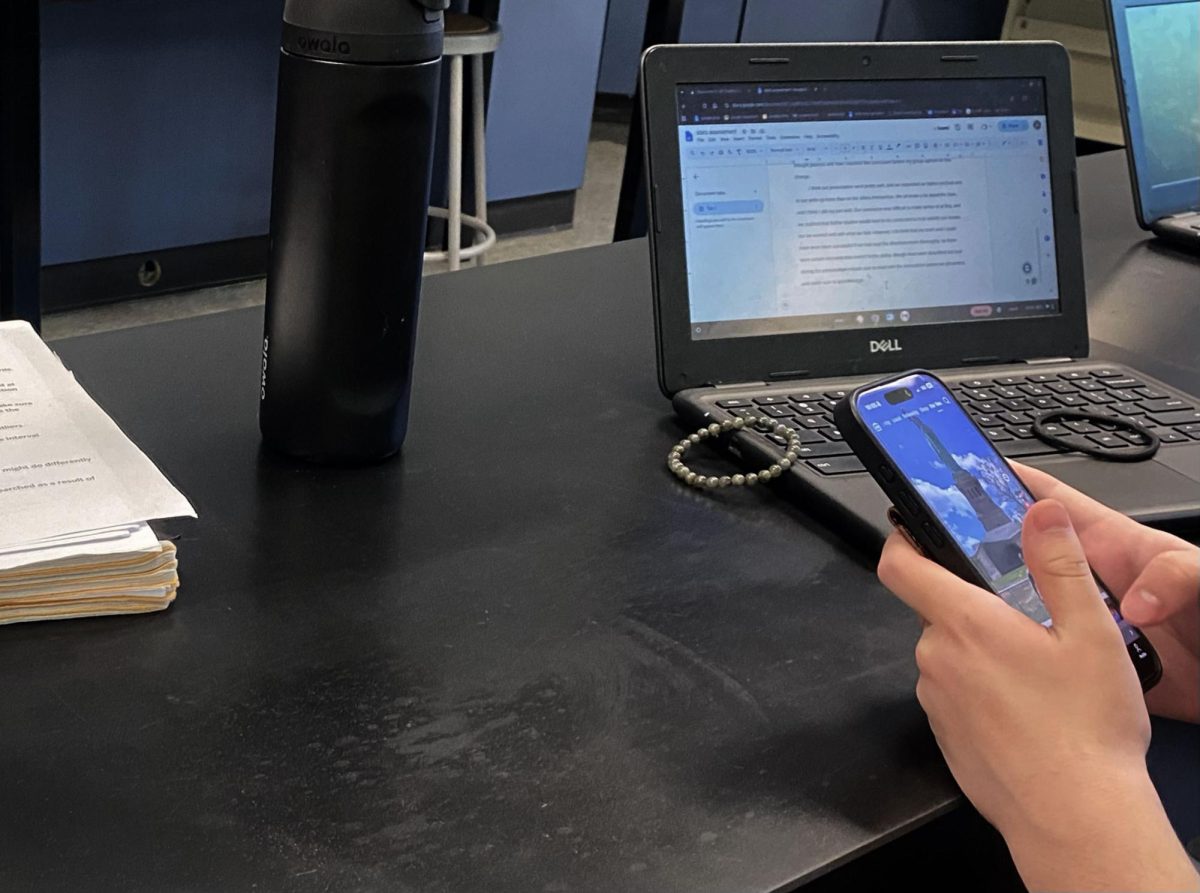





Passing notes in class was a staple of school life for decades until the arrival of the cellphone. Now, due to the passing of the bell-to-bell restriction policy, which bans high school students from using their phones during the school day, pen and paper are making a comeback.
A new state law requires that high school students in New York not have cellular devices out while on campus during the school day. Schools across New York are hoping for an increase in social connections between students, as well as more retention of material. It is too early in the year to see if the elimination of phones has led to higher test scores, but it is the hope of Gov. Kathy Hochul that it does. According to a study by the School Pulse Panel of nearly 1,500 public schools in the U.S., over 50% of public school staff believe that their students’ academic performance has been impacted by cellphone usage in a negative way. Gov. Kathy Hochul hopes that banning phones in school will undo the damage that they have inflicted upon student learning.
Cellphones have specific algorithms that cater to the individual and make the device hard to put down. In an interview with Karen Siedlecki, a memory expert at Fordham University and Cold Spring resident, she revealed her thoughts on the impact phones have on knowledge retention and attention span. She said, “If you are trying to acquire information, then using your cellphone while trying to attend to the information will negatively impact your ability to acquire the information. In general, people are not very good at “multitasking”- instead, we rapidly toggle our focus between competing demands.”
Concerning attention spans, Siedlecki stated, “There is fairly convincing evidence that attention spans are diminishing. This could be due, in part, to the amount of information we consume and the speed at which we consume it, usually via our cell phones.”
While evidence suggests that phones negatively impact attention span and knowledge retention, there is some research that supports the benefits of cellphone use in schools. A study conducted by the National Institute of Health on the academic performance of elementary students concluded that smartphones do help improve classroom achievement. The students were grouped according to smartphone usage in their daily life, pertaining to both home and school use, and the amount of use. The students who scored highest were mainly from the high usage group. The study said, “Students’ academic performance may be adversely affected by fewer opportunities for access.” Cellphones are the deciding factor in access to knowledge.