




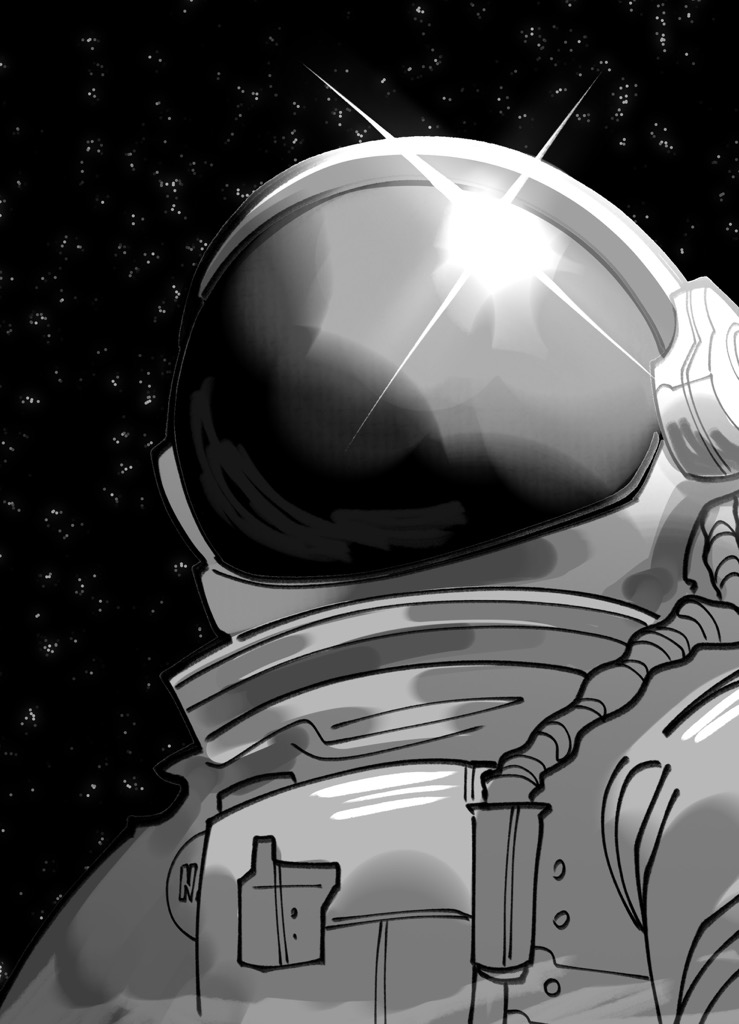
When confronted with the great question of life, we tend to look up for answers. Space is our final frontier, but at the moment, we have little idea of what life could look like on foreign planets, if it exists at all. This does not make us fully helpless; it just makes us overconfident. After all, our species has demonstrated remarkable intelligence in its ability to cause problems for itself. However, it does mean we are limited in our understanding of life. All we can do for now is think and search from our outpost of dirt and oxygen. And, having existed within a scientific echo chamber, researchers from NASA, the European Space Agency, and The Galileo Project tend to search for life as seen on Earth: carbon-based, energy-consuming, and constantly reproducing. Which is reasonable, until you remember that our sample size is one.
The truth is, life on other planets could be the antithesis to our understanding of everything we call “alive”. It would be meaningless to try to explain how long the upstairs boys’ bathroom has been closed to a species that doesn’t interpret time linearly, or to politically debate with a species that doesn’t comprehend competition. It’s nearly impossible to imagine that out of all of the possible forms of life, the one we might find fits our understanding of life. However, it’s also true that the odds of life in our galaxy alone are around 2.5 billion to 1. Nevertheless, out of the countless experts researching this vast question, Haldane students may have the answer.
After interviewing several Haldane students, I collected three responses to this great question. Beren Kolarek states: “I don’t know, but it doesn’t seem to matter in the end. How does it affect us?” Another stated that aliens most likely exist, but we will never reach them due to the vastness of space. A third stated that they must exist; there are too many planets for them not to. The consensus: Aliens most likely exist, but they are either too far, too primitive, too advanced, or too different to relate to humans. The idea of “life” is not a very concrete thing, and our interpretation of it across cultures and individual philosophies often doesn’t lead to a sufficient answer.
Humans seem to have evolved an unusually high aversion to uncertainty, which leads them to construct explanations even in its absence – a habit that, from an alien perspective, is both consistent and unnecessary. While many other species are content with living among their own, most of us have the urge to find anything… that isn’t us. Whether that is a curse or a blessing is up to your interpretation. In the end, it is fair to say we do not have the answers to the mysteries of the cosmos, and the cosmos has not, so far, submitted any corrections.