

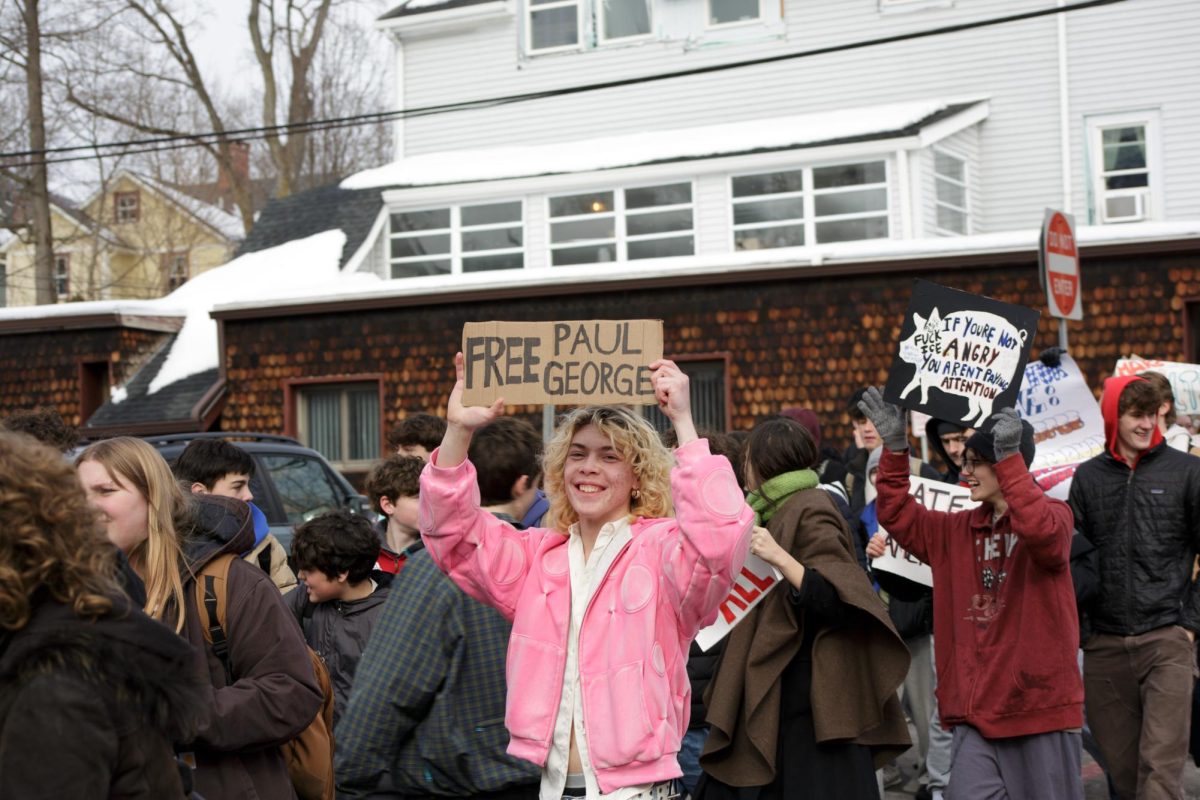


When more than 200 students, roughly a third of Haldane’s total population, cut their ninth-period classes on February 6, the atmosphere was charged but uncertain. What the high school students of Haldane organized that day was a remarkable demonstration of not only their right to protest but also the ability of young people to support their political opinions proudly and peacefully. For most students, it wasn’t an excuse to skip class; it involved risk and in-depth strategy. The protest drove a powerful message that genuinely drew attention to the issue instead of just acting as an empty performance.
When asked about her opinion on the protest, junior Corinna Mueller, who helped organize the walkout, stated: “Watching so many young people come together to take a stand against ICE’s cruelty was incredibly powerful, and I hope students left with the determination to continue fighting for our futures beyond just this.”
The lasting impact of the Haldane protest largely depends on whether or not that determination continued after the walkout ended, and unfortunately, in my opinion, it largely did not. For many students, including myself, the walkout felt powerful, but it also left a false sense of closure. Psychologists refer to this phenomenon as “Activism Fatigue”- once an individual performs a form of activism, especially after posting it on social media or receiving praise from their peers, they often feel they have already done enough. However, in a move against such fatigue, a multitude of Haldane students are deeply involved in activism outside of school, attending protests, joining organizations, and participating in boycotts.
The Haldane protest did highlight a key limitation of all school walkouts. It is not helpful to the school district or students to cut classes regularly to spread a message. Ultimately, a single day of protest cannot fully substitute for an ongoing protest to change policy like the ICE expansion.
So what can students even do? There are real limits to what a high school student can accomplish given their limited resources and time, but there are still meaningful ways to remain engaged. Many students join advocacy groups and participate in boycotts against companies that support ICE’s expansion. Recognizing and building off of these limitations can act as a lasting lesson on balancing personal growth and communal action. Small actions do make a difference, even if a student is unable to participate in group actions like the walkout. Real change happens after the protest, through all the smaller and less glamorous battles.