



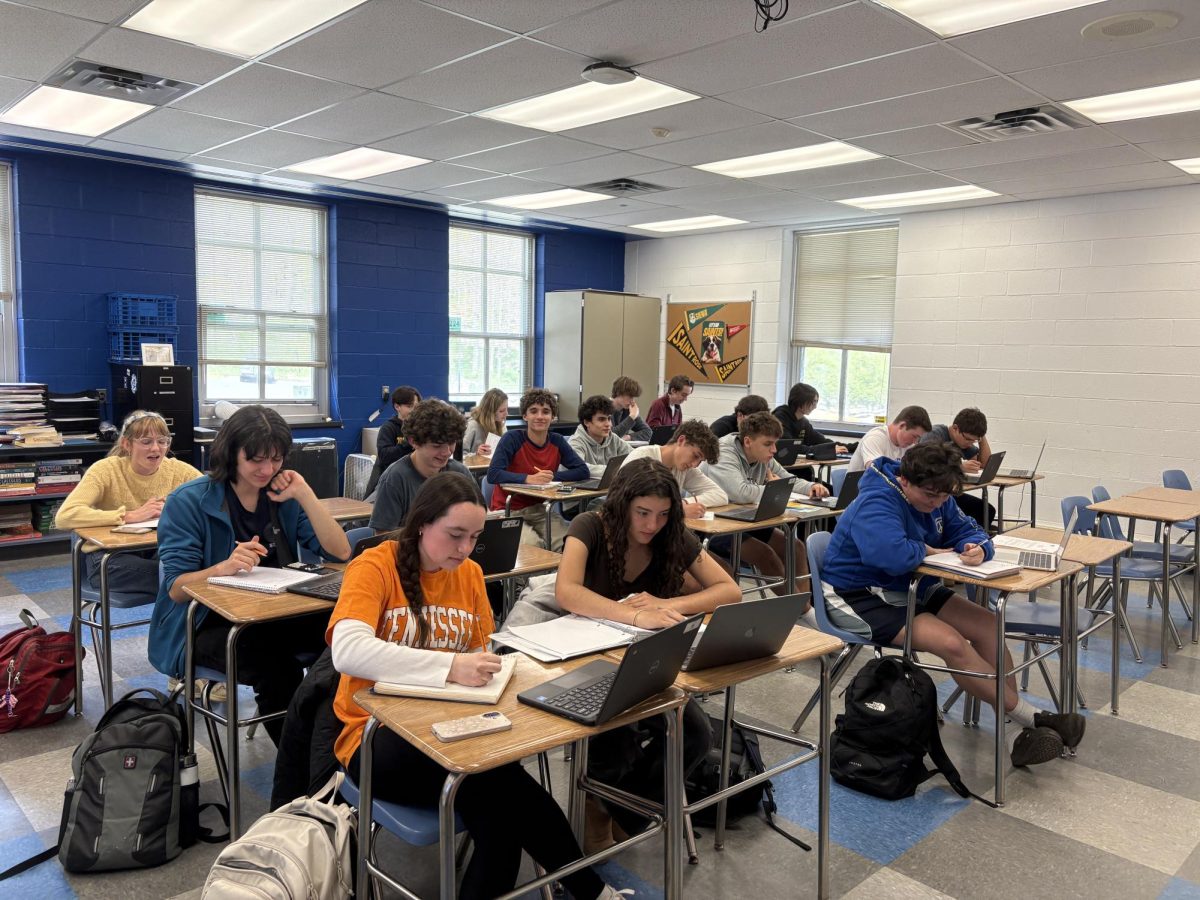
During the sunny, cherry-blossom-filled weeks after Spring Break, when seniors are relaxed, and freshmen are finally acting like high schoolers, something nauseating lurks in the minds of Haldane’s sophomores and juniors: their upcoming AP exams.
Many Haldane students take their first AP tests in tenth or eleventh grade, and it can be difficult to know how to study and what to expect. But by the time some students have reached senior year, they’ve taken upwards of five APs, and they have plenty of advice for their younger peers.
Before studying for an AP, the first thing students should do is familiarize themselves with the format of the test. For example, the AP World History test consists of 55 multiple-choice questions, three Short Answer Questions, one Long Answer Question, and one Document-Based Question. Notice how much time is allotted for each section of the test. Get comfortable with the rubric of each type of writing question and know how to get each point. For math and science APs, notice what information the reference table does and doesn’t have, and how the written formulas may differ from the ones used in class.
Then make a study plan. “I’m a procrastinator, so planning out when I would cover which topics and following that plan really helped me get through all the material in time,” said senior Owen Sullivan-Hoch. Studying can be split into two categories: memorization and developing skills. In general, history, foreign language, psychology, statistics, and biology require more memorization, while English, physics, and math require more skills.
Many history students like to watch Heimler’s History videos, which can be helpful as a general review of the content. However, according to senior Kaito Kester, the most effective way to memorize information is by using active recall, which means making flashcards, fill-in-the-blank worksheets, or taking practice tests–anything that forces you to actively remember a fact. “A favorite of mine is the Feynman technique,” said Kester, “where the student teaches the material, reiterating the information into something comprehensible for them and allowing them to identify gaps in their understanding.”
For tests that focus more on developing skills, practice tests make perfect. Some Haldane teachers will give students an AP review book toward the end of the year, but for other classes, students buy them themselves. “I recommend Barron’s and Princeton Review books,” senior Amelia Kaye said. Students can also use the free practice questions on AP Classroom. If a practice test includes writing an essay, teachers may be willing to grade it (be very polite and gracious, as they also have a lot on their plates this time of year). Some teachers at Haldane, typically all the history teachers, will also offer in-school practice APs.
Once the date of the test has almost arrived, stop studying and rest. “I recommend studying weeks in advance but not the day before,” Kaye said. “The night before, sleep is so much more valuable than any studying,” senior Sofia Kelly said. This year, APs will be held in the American Legion Memorial Hall on Cedar Street. Make sure to bring food and water, as most AP tests include a ten-minute break halfway through, during which students can eat, drink, and go to the bathroom. Remember to charge By Louisa Schimming your Chromebook the night before the test and bring a charger. Wear something comfortable, with multiple layers in case it’s hot or cold, and if you have long hair, bring a hair tie.
Stressing out won’t help, so try to stay calm and remember that it’s just a test. Most colleges don’t require all of a student’s AP scores to be sent when they apply, so a bad score is most certainly not the end of the world. “Being nervous is a natural part of these big tests, but when it’s time to lock in, it’s time to lock in,” Kester said. “It’s just a matter of calming yourself down, wishing your friends good luck, and concentrating.”