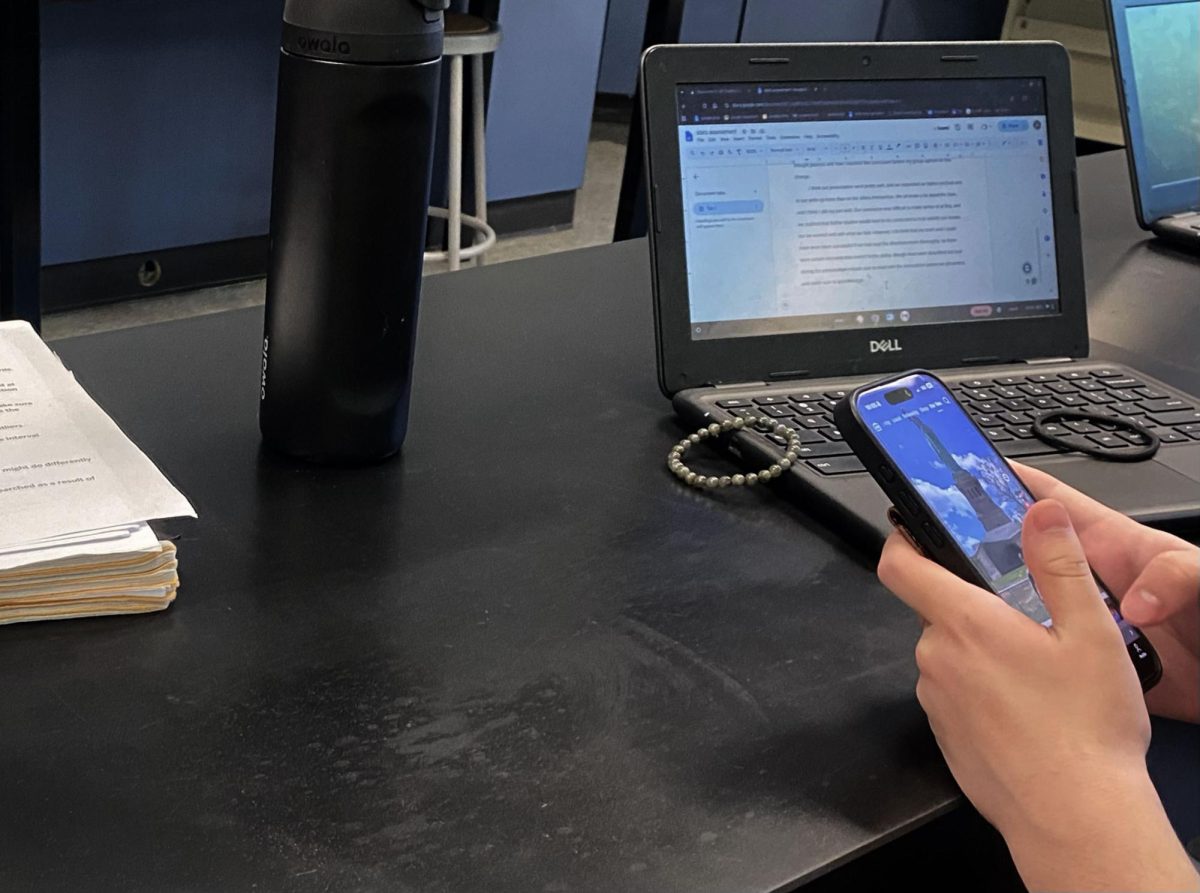





As the end of the year approaches, college applications appear on juniors’ to-do lists, and a daunting question pops into some students’ minds: “Should I go out of the country for college?”
Upperclassmen guidance counselor Amanda Cotchen has seen an increase in Haldane students applying out of the country for college, mainly in Canada, the U.K., Ireland, and Central Europe. Haldane isn’t the only school— across the U.S., the number of students applying out of the country has dramatically increased in the past five years. According to CBS News, the number of American students studying internationally grew from roughly 50,000 in 2019 to over 90,000 by 2024. The Universities and College Admissions Service has seen a 14% increase in American students studying in the U.K. since it started collecting data in 2022.
Senior Áine Duggan, who is committed to Trinity College Dublin, always knew she wanted to go far. “I have always been excited for my next adventure after high school and wanted to experience post-high school life in a new environment,” said Duggan.
Yet for 2025 Haldane alumnus Louis Ferreira, who is a student at the University College Dublin, leaving the country had political reasons. “I make no disguise of my dislike of the Trump administration… their awful remarks towards the transgender community… along with their nomination of RFK Jr. with his anti-autistic stance [were] enough of a reason for me to want to leave.”
Another reason that students choose to apply internationally is that going out of the country is often significantly cheaper than staying in the United States. The U.S. has one of the highest tuition rates globally, and the average annual tuition is around $34,000, while the U.K.’s average is around $13,000, according to the Education Data Initiative. Additionally, many overseas undergraduate programs take just three years to complete, as opposed to the traditional four years.
However, some students are discouraged from applying internationally because the process is very different from applying to schools in the U.S. While most U.S. schools use the Common App for their applications, many international schools have a unique system for applying. Depending on the school or country, students may have to translate school documents into the country’s native language, take additional tests, or take specific courses before applying to an international school. International schools also prioritize different things when reviewing applications. “Admissions is typically more focused on academic qualifications rather than a holistic review (extracurriculars and personal qualities),” stated Cotchen. “European universities often require 3-5 Advanced Placement courses or exams, and certain programs may require specific courses.”
Of course, leaving the country has its difficulties: “Social isolation, difficulty in meeting new people, not really knowing people…” Ferreira listed, “missing home because pizza wasn’t the same…” Choosing a college—international or within the U.S.—should be a personal choice based on the student’s priorities and their character.