


From Oscar-award-winning director Guillermo Del Toro of “Pan’s Labyrinth” and “The Shape of Water” fame comes a new take on an old literary classic. A staple of Haldane’s sophomore English classrooms, Mary Shelley’s “Frankenstein” was conceived on the shores of Lake Geneva as part of a story contest between legendary romantic poets Lord George Gordon Byron, John Palodori, and Shelley’s husband, Percy Bysshe Shelley, and is widely regarded as the first science fiction novel ever written.
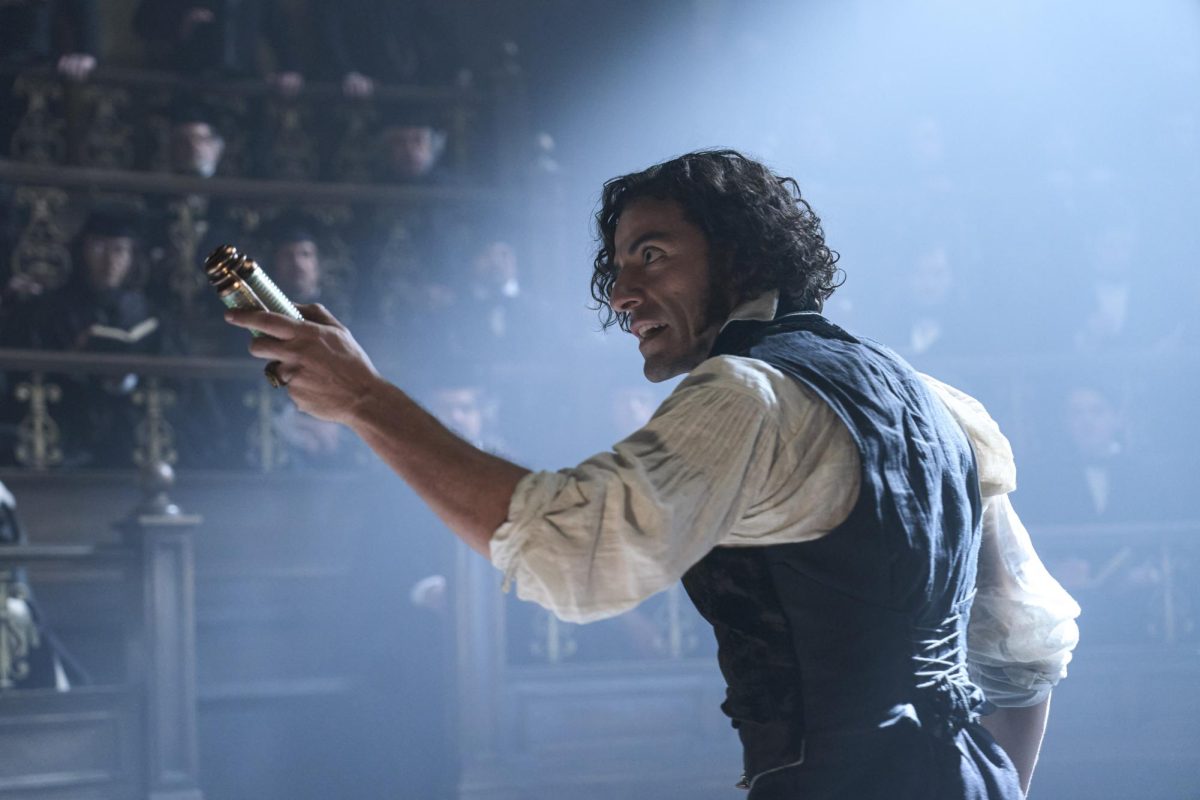
Del Toro’s “Frankenstein” features Oscar Isaac as the titular, ambitious, and arrogant Dr. Victor Frankenstein. After his mother (Mia Goth) passes away, Victor becomes obsessed with “curing death” through scientific research. With the backing of arms merchant Henrich Harlander (Christopher Waltz), Frankenstein succeeds in creating his ‘monster’ (Jacob Elordi). In a manner mirroring the mistreatment he suffered at the hands of his own father (Charles Dance), he abuses and mistreats his creation, setting off a chain of events that tie in with the movie’s opening sequence.
Throughout the years, “Frankenstein” has received many adaptations for the big screen. First was James Whale’s 1931 horror film “Frankenstein” and its 1935 sequel “Bride of Frankenstein”. The duology established the iconic image of Frankenstein’s monster as the lumbering, screw-necked, simple-minded creature. This characterization remained throughout film adaptations in the following decades. Del Toro’s 2025 “Frankenstein” is a refreshing return to Shelley’s original monster. The creature both sounds and acts much more human than your typical movie monster. Elordi’s performance as the iconic creature is a welcome change from the slow-minded and slow-moving depictions that have plagued Frankenstein adaptations for decades. This is an eloquent person, trapped in a monstrous form by his unsympathetic ‘father’, not some mindless creation, more animal than human.
However, what is gained in humanity is perhaps lost in horror. Elordi is scary for maybe the opening scene of the film. The practical effects are impressive, but they fail to pick up the slack left by the plot, which, while well written and well executed, leaves much to be desired in terms of stakes. For horror to work, it requires the viewer to put themselves in the shoes of the one being threatened, but once I saw what the creature went through, it was hard to think of him as anything less than righteous. I empathized with the creature much more than the narcissistic Victor, and so I didn’t care when the creature threatened him. It is one of the few changes Del Toro makes that I do not approve of. By removing practically all fault for the film’s tragic events from the creature, it also removes much of the nuance present in the original tale. Victor is so clearly wrong that it almost makes the contrarian in me want to root for him regardless, although Isaac’s charisma certainly doesn’t hurt.
The biggest challenge with adopting a 200-year-old book for a modern audience is that, quite simply, the world has changed. An overarching theme in the original book is the dangers of playing God. Victor was smited for messing with life and death, the sole domain of the divine. The problem is that in the 1820s, almost all of the readership would have been Christian. Now, only 22% of Europeans manage to visit church once a month. We live in a decidedly less religious age, and so the idea that humanity should somehow be punished for trying to stop death fails to resonate in the same way that it did in the original story. It is still a masterful film on the dangers of ambition and hubris, but it fails when trying to convince me that what Victor tried to do was a negative thing. Sure, the methods by which he achieved his goal were flawed, both morally and scientifically, but for a story about the dangers of technology, it seems to me that as long as you aren’t an abusive parent, you should be able to mess with the laws of nature as much as you’d like.
But I’ve spent enough time harping on the film’s failures. Where “Frankenstein” really shines is in the aesthetics. It is a period piece in the best sense of the word. From the costumes, to the sets, to the almost dreamy-seeming filter of the camera itself, I felt as if I was being taken back in time. The symbolism in the colors of Elizabeth Harlander, Victor’s love interest and sister-in-law (Also, interestingly enough, played by Mia Goth), effectively mirrors her relationship with the mad scientist.
The “Frankenstein” of 2025 is the closest thing we’ve gotten to a ‘faithful’ (whatever that really means) adaptation of Shelley’s novel. While it stumbles in some areas, its biggest faults are a product of the faithfulness of the adaptation. While some of the changes may have book purists pulling out their hair, “Frankenstein” should take its rightful place next to the “Lord of the Rings” trilogy and the “Shawshank Redemption” on the shelf of amazing book-to-movie adaptations. For me at least, Del Toro’s “Frankenstein” gets a thumbs up.