



“What the hell just happened?” If you have seen “2001: A Space Odyssey,” this, perhaps, is what you said when the credits rolled. If you have not seen it, you may have heard some mixed reviews.
Despite its controversial nature, “2001” is a classic sci-fi film, often praised as one of the greatest movies in cinema history. Currently, it is the hundredth best movie on IMDB’s “Top 250 Movies” ranking. But you have probably heard others denouncing the plot’s quality, the lack of character development, and the film’s excessive ambiguity.
But how can a movie be that confusing? What’s so controversial about a space adventure? And, most importantly, should you sit down for two and a half hours and experience it?
Directed by Stanley Kubrick and released in 1968, the film follows the origins and evolution of the human race, exploring the human condition and the essence of human intelligence.
The film starts in the prehistoric era, following a group of primates’ rise from starving and helpless apes to pioneers of the Anthropocene. Then, it fast-forwards to the year 2001, when mankind has grown significantly since their inception. Instead of bones, their most prominent technology can reach the stars.
The rest of the story follows as humans discover a mysterious black object on the moon and journey throughout the solar system, searching for signs of extraterrestrial intelligence.
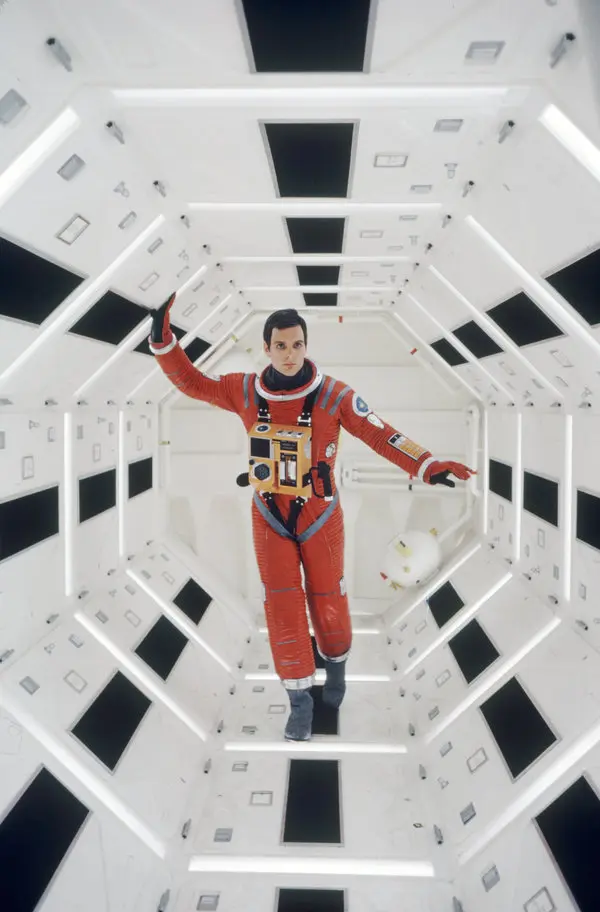
For its time, the film’s production was remarkable. Even though computer graphics were barely as accessible and versatile as they are today, the filmmakers had clever workarounds to create a believable zero-gravity environment, and the final result is practically errorless. According to an interview done with Kubrick by Vulture, the artificial gravity in the rotating space stations was achieved with a $750,000 spinning set, where the actors had to move with the rotating centrifuge to create the illusion of gravity.
The movie is also credited with popularizing many classical pieces, such as Johann Strauss Junior’s “Blue Danube Waltz,” and the opening to Richard Strauss’s tone poem “Also Sprach Zarathustra” (the composers aren’t related, despite their last names). Mysterious scenes, such as the appearance of a pitch-black monolith, take advantage of contemporary composer György Ligeti’s unsettling scores. It’s neither complex nor melodic; only deep rumbles and dissonant pitches that hang on your eardrums. And the effect is exceptional, dramatically heightening the story’s eeriness.
But the film does have its flaws.
The film is amazingly slow, as a single shot of a landscape can stretch to multiple seconds of screentime (in fact, the movie’s iconic docking scene lasts five minutes! Five minutes for one ship to dock). Additionally, the plot trudges along at an awkward pace (for example, it takes twenty minutes until the story’s “prologue” switches to an “actual space odyssey”), with each shot being painstakingly slow.
None of the characters remedy the film’s slowness. Their dialogue is simple, with minimal subtext that shows little emotion or motivation. The actors’ performances are often shallow, as if they were simply present in the story. In fact, the most “human” character of the story is, hilariously, the supercomputer villain HAL-9000. In one instance, his dialogue uncovers a strange vulnerability. “I’m afraid,” he pleads to a crewmate, as if an innocent child was speaking through the computer’s constantly bored tone. And this is not a negative. Actually, it is one of the most poignant and striking moments in the plot.
But the most striking, and most controversial, part of the plot is the ending. Some praise it, while others denounce it, and the reason is simple: no one knows what is going on. This isn’t due to comprehension issues or poor storytelling; the entire sequence is truly ineffable. Thus, the ending’s significance and role in the story become highly ambiguous, which is frustrating for many viewers.
The movie isn’t popcorn cinema. It incessantly demands your engagement to understand the meaning behind every shot and to discern the implications of each scene. That’s because everything was done purposefully.
Often, a story’s progression falls into two categories. Either the events continually motivate it, or the characters’ actions determine the final outcome. This movie is neither, and it is placed in its own category: theme-driven stories. “2001: A Space Odyssey” depicts the grandiose creation of mankind, it explores the hopes and dangers of technological ambition, and narrates humanity’s journey to transcendence. The odyssey itself doesn’t come from the plot, but from the exploration of the unknown. It is to push through the ambiguity, to find hidden patterns, to make new discoveries, and, in the end, to have profound revelations.